

| QUICK ANSWER
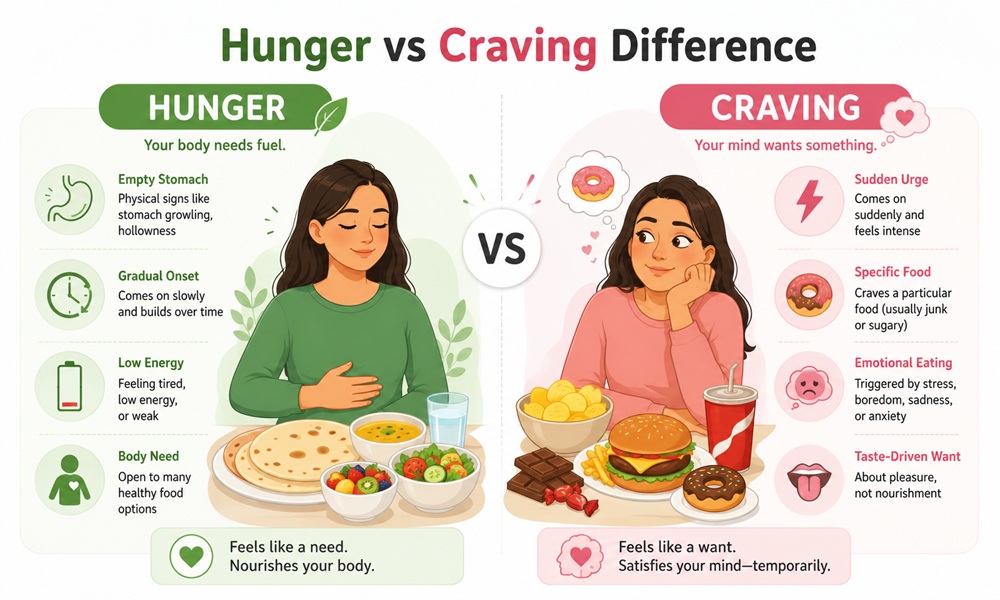
Hunger is your body’s physical need for energy — it builds gradually, almost any food sounds good, and it eases once you eat. A craving is your brain’s desire for a specific food, often triggered by emotion, habit, or sight and smell — it comes on suddenly, fixates on one thing (often sweet, salty, or fatty), and does not truly settle even after eating. |
Both push you toward food, but they come from different places — the body versus the brain. Learning to tell them apart makes eating feel calmer and more intentional, without rigid rules.
Signs of physical hunger vs a craving
| Physical hunger | Craving |
| Builds slowly over time | Hits suddenly, often out of nowhere |
| Many foods sound good | Fixed on one specific food |
| Felt in the body (empty stomach, low energy) | Felt in the mind; often tied to a mood |
| Patient — can wait a little | Urgent — wants it now |
| Eases and stops once full | Lingers; may continue past fullness |
| No guilt afterward | Sometimes followed by regret |
Why cravings happen
- Emotions: stress, boredom, sadness, or even celebration can spark a craving.
- Habit and cues: the sight or smell of food, a certain time of day, or a familiar routine (tea with a biscuit).
- Sleep and balance: poor sleep and very long gaps between meals can intensify cravings.
- Reward wiring: sweet, salty, and fatty foods light up the brain’s reward pathways, which is why those are the usual targets.
| THE PAUSE TEST + ‘HALT’ CHECK
When the urge hits, pause and ask: would a plain, simple meal satisfy this? If yes, it is likely real hunger. If only one specific treat will do, it is likely a craving. Then run ‘HALT’ — am I Hungry, Angry, Lonely, or Tired? Often the answer is one of the last three, and the real need is rest, connection, or a break rather than food. |
How to respond — gently
When it is true hunger
- Honouring real hunger with balanced, satisfying food helps prevent bigger cravings later.
- Aim for regular meals so hunger does not spike into urgency.
When it is a craving
- Wait a few minutes and drink some water — many cravings pass.
- Address the real trigger: a short walk, a chat, or rest if HALT points there.
- If you still want the food, enjoy a reasonable portion mindfully, without guilt — restriction often makes cravings stronger.
Building a calmer relationship with food
Telling hunger and cravings apart works best as gentle awareness, not strict control. Over time, a few habits make both easier to read:
- Eat regularly. Long gaps spike hunger into urgency and make cravings louder.
- Avoid ‘forbidden’ labels. Rigid bans tend to intensify cravings; allowing foods in reasonable amounts reduces their pull.
- Sleep and de-stress. Tiredness and stress both amplify cravings, so rest and downtime are part of appetite balance.
- Eat with attention. Slowing down and noticing taste and fullness helps you recognise when you have had enough.
The aim is not to win a battle against cravings but to respond to what you actually need — nourishment when hungry, and rest, connection, or calm when the urge is really about emotion.
Why it matters
Understanding the difference is not about labelling foods good or bad. It is about responding to what your body and mind actually need — food for hunger, and rest, connection, or calm for the emotions behind a craving. That awareness tends to make eating more relaxed and balanced over time.
FAQ
Is craving a sign of nutrient deficiency?
Most everyday cravings are driven by habit, emotion, and reward rather than a specific deficiency. Persistent unusual cravings (for example, for ice or non-food items) are worth mentioning to a doctor.
How do I stop emotional eating?
Notice the trigger, pause before eating, and try meeting the underlying need directly — rest, support, or a break. Being kind rather than strict with yourself tends to work better long term.
Why do I crave sugar at night?
Evening cravings often come from long gaps without eating, tiredness, stress, and habit (the after-dinner routine) rather than true hunger. Eating balanced meals earlier and winding down with a non-food ritual can ease them.
Does drinking water reduce cravings?
Sometimes. Thirst can masquerade as a craving, and pausing for a glass of water buys time for a non-hunger urge to fade.
