

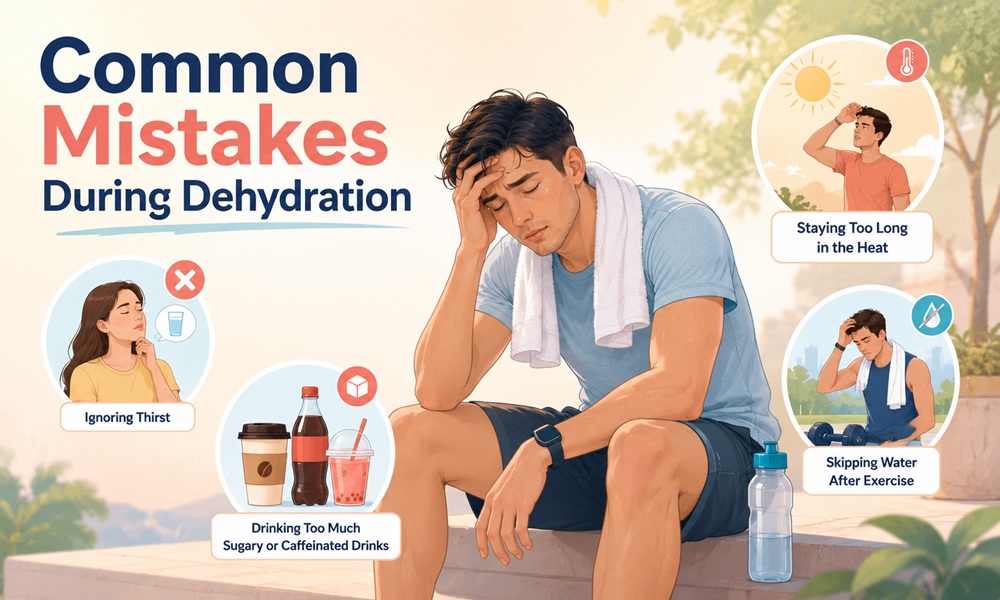
When your body is short on fluids, what you do next matters. Rehydrating in a hurry or with the wrong drink can leave you feeling worse, not better. Here are the most common mistakes people make once dehydration sets in, and how to avoid each.
- Waiting until you feel thirsty. Thirst is a late alarm. By the time you feel it, you’re already mildly dehydrated. On hot or active days, drink on a schedule rather than on thirst.
- Gulping a huge amount at once. Chugging a litre fast doesn’t rehydrate you faster; much of it passes straight through and your body can’t absorb it efficiently. Steady sips win.
- Drinking water but ignoring electrolytes. Sweat loses sodium and potassium, not just water. Plain water alone can dilute your remaining electrolytes and worsen symptoms like cramps and headache. Replace salts too.
- Reaching for sugary sports drinks. Many are heavy on sugar and light on electrolytes. Excess sugar can slow fluid absorption and even aggravate symptoms. Choose a low-sugar electrolyte option.
- Slamming ice-cold water when overheated. Very cold water can briefly constrict blood vessels and, in rare cases, trigger a vagal response. Cool, not freezing, water rehydrates more comfortably.
- Relying on coffee and tea as your only fluids. They do hydrate, but they’re mild diuretics. If they’re most of your intake, balance them with water.
- Overcorrecting into overhydration. Drinking far too much water too fast can dangerously dilute blood sodium (hyponatraemia). More is not always better; aim for steady, not extreme.
Know the early signs before it gets serious
| Mild dehydration | Moderate | Get urgent help if |
| Thirst, dry mouth | Headache, dizziness | Confusion or fainting |
| Dark yellow urine | Reduced urination | Rapid heartbeat |
| Tiredness | Dry skin, cramps | No urine for 8+ hours |
| Trouble focusing | Irritability | Sunken eyes, no tears |
A handy gauge: aim for pale-yellow urine. Dark urine means drink more; consistently clear may mean you’re overdoing it.
How to rehydrate the right way
Follow this simple sequence rather than panic-drinking:
- Move to a cool, shaded place and stop the activity that caused the loss.
- Sip cool (not ice-cold) water steadily over 20-30 minutes.
- Add electrolytes if you’ve been sweating heavily, exercising, or had vomiting or diarrhoea.
- Include water-rich foods like fruit, cucumber and yoghurt, which also supply minerals.
- Keep sipping over the next few hours; one drink doesn’t undo a day’s deficit.
Foods and drinks that rehydrate well
Rehydration isn’t only about water. Several everyday choices restore both fluid and the minerals you’ve lost:
- Water-rich produce: watermelon, cucumber, oranges, tomatoes and strawberries are mostly water plus useful minerals.
- Coconut water and buttermilk: both supply natural electrolytes and are gentle on the stomach.
- Oral rehydration solution: the most effective option after vomiting or diarrhoea, because the balance of salt and sugar helps the gut absorb water faster.
- Soups and broths: fluid plus sodium in one, especially helpful in hot weather.
Skip alcohol and very sugary drinks while recovering; both can pull water out or slow absorption and set you back.
Who is most at risk?
| Higher-risk group | Why |
| Older adults | Weaker thirst signal; dehydrate faster |
| Young children | Don’t recognise thirst; lose fluid quickly |
| Outdoor workers and athletes | Heavy sweating in heat |
| People who are ill | Fever, vomiting and diarrhoea drain fluids |
Children and older adults dehydrate faster and feel thirst less reliably, so prompt, regular fluids matter even more for them. If symptoms are severe or don’t improve, seek medical care, since oral rehydration may not be enough.
Frequently asked questions
What’s the fastest way to rehydrate?
Steady sips of water with electrolytes beat gulping plain water. After heavy sweating, vomiting or diarrhoea, an oral rehydration solution works fastest because its balance of salt and sugar helps your gut pull water in. Pairing fluids with a little salt and some water-rich food speeds recovery.
Is plain water enough, or do I need electrolytes?
For everyday mild dehydration, water is usually fine. But once you’ve sweated heavily or lost fluids through illness, water alone can dilute your sodium and leave you cramping and headachy. That’s when electrolytes matter.
Can you drink too much water?
Yes. Forcing very large volumes quickly can dilute blood sodium, a dangerous state called hyponatraemia. It mainly affects endurance athletes and anyone over-drinking out of worry. Steady, sensible intake guided by urine colour avoids both extremes.
How long does it take to recover from dehydration?
Mild dehydration often improves within an hour or two of steady sipping and rest in a cool place. A bigger deficit, or fluid lost through vomiting, diarrhoea or a long hot day, can take the rest of the day to fully correct, which is why one drink isn’t enough. Pale-yellow urine is your sign you’ve caught up.
Note: dehydration can become a medical emergency; this is general guidance, not a substitute for professional care.
