

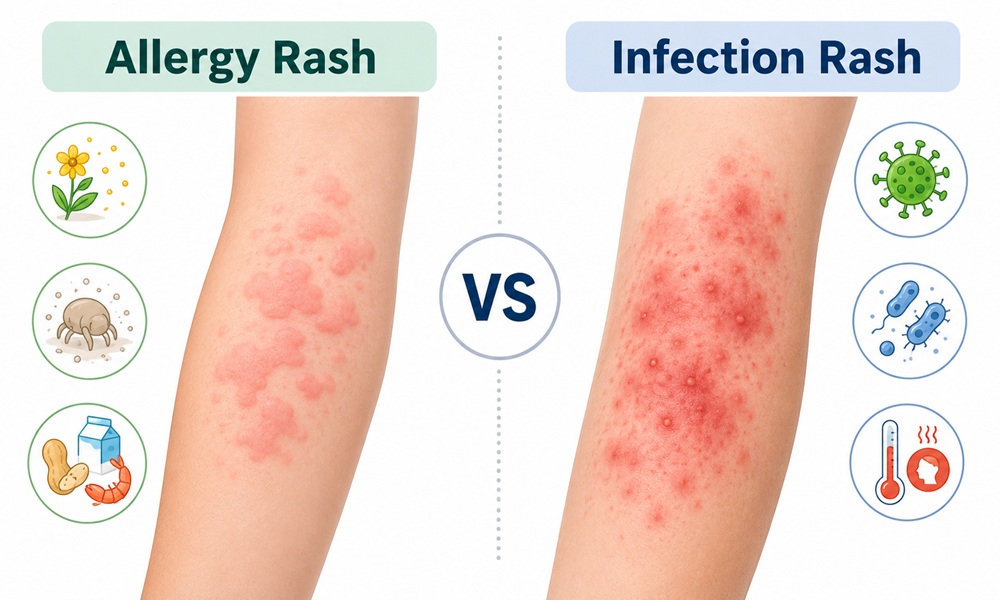
Rashes are one of the hardest symptoms to read, because very different problems can look similar. The two big buckets are allergic reactions and infections. Here is how to tell them apart — and the one test that can flag an emergency.
What an allergic rash usually looks like
Allergic rashes are driven by the immune system reacting to a trigger — a food, medicine, plant, metal, fragrance, or insect.
- Itch is the headline symptom — often intense.
- Comes on fast, sometimes within minutes to a couple of days of contact.
- Common looks: raised welts (hives) that may move around, or dry, red, scaly patches where something touched the skin (contact dermatitis).
- Often clears when the trigger is removed or with antihistamines.
- No fever, no pus, and you otherwise feel well.
What an infection rash usually looks like
Infection rashes come from viruses, bacteria, or fungi. The skin or the whole body is fighting an organism.
- Builds more gradually and may spread outward over hours or days.
- Often warm, tender, or painful rather than mainly itchy.
- Bacterial skin infection may show redness spreading from one spot, swelling, or pus.
- Viral rashes (like many childhood illnesses) often come with fever, sore throat, or body aches.
- Fungal rashes are often ring-shaped, scaly, and slowly enlarging.
Allergy vs infection rash: comparison
| Clue | Allergy | Infection |
| Itch | Usually intense | Variable; often more painful than itchy |
| Onset | Fast, after a trigger | Gradual; may spread |
| Fever | No | Often yes (esp. viral/bacterial) |
| Pain / warmth | Uncommon | Common |
| Pus / oozing | No | Possible (bacterial) |
| Pattern | Where contact happened, or all over | Spreading, ring-shaped, or with blisters |
| Feels unwell? | Usually no | Often yes |
| EMERGENCY: THE GLASS / BLANCH TEST
Press the side of a clear glass (or a finger) firmly over the rash. If the rash fades under pressure, it is ‘blanching’ and usually less worrying. If it stays visible and does NOT fade, it may be a non-blanching rash — a possible sign of a serious infection like meningococcal disease, especially with fever, stiff neck, or drowsiness. A non-blanching rash with these signs is a medical emergency — seek care immediately. |
| ALSO SEEK URGENT CARE IF…
There is swelling of the lips, tongue, or face, trouble breathing, throat tightness, or dizziness after a trigger — this can be anaphylaxis, a life-threatening allergic reaction. Use an adrenaline auto-injector if prescribed and call emergency services. |
A simple decision checklist
Work through these in order:
- Any breathing trouble or face/throat swelling? → Emergency.
- Non-blanching rash with fever or stiff neck? → Emergency.
- Fever, pain, pus, or spreading redness? → Likely infection — see a doctor.
- Very itchy, fast onset, clear trigger, no fever? → Likely allergy — antihistamine and avoid the trigger.
- Not sure, or not improving in a few days? → Get it checked.
Typical triggers behind each
Common allergic-rash triggers
- Foods such as nuts, shellfish, eggs, and milk; certain medicines; and insect stings.
- Contact triggers: nickel jewellery, fragrances, cosmetics, latex, and plants like poison ivy.
- Pet dander, dust mites, and new fabrics or detergents.
Common rash-causing infections
- Viral illnesses such as chickenpox, measles, and hand-foot-and-mouth disease.
- Bacterial skin infections like impetigo and cellulitis.
- Fungal infections such as ringworm and athlete’s foot, which thrive on warm, damp skin.
Knowing which camp a rash belongs to guides the fix: removing a trigger and using antihistamines for allergy, versus targeted antiviral, antibiotic, or antifungal treatment for an infection. When the cause is unclear, a clinician can read the rash’s pattern, your recent exposures, and other symptoms to pin it down.
FAQ
Can an allergic rash turn into an infection?
Yes. Scratching an itchy allergic rash can break the skin and let bacteria in, leading to a secondary infection. Increasing pain, warmth, pus, or fever are the warning signs.
Do allergy rashes cause fever?
Allergic rashes alone do not cause fever. If a rash comes with fever, think infection (or another illness) and have it assessed.
How long does an allergic rash last?
Hives often fade within hours to a day or two once the trigger is gone. Contact rashes can linger one to three weeks. A rash lasting longer, or spreading, deserves a review.
Is a rash with blisters allergy or infection?
Both are possible — poison-ivy type allergy can blister, and so can viral infections like shingles or chickenpox. Painful, one-sided blisters in a band suggest shingles and need prompt care.
Note: This is general information. Any rash with severe or spreading symptoms should be seen by a clinician.
